One of the most unsettling and enigmatic works of the 19th century: The Book of Were-Wolves, by Sabine Baring-Gould.
This pioneering treatise explores with rigor and fascination the dark superstition of werewolves, tracing its origins in Antiquity, the Middle Ages, and the folk traditions throughout Europe.
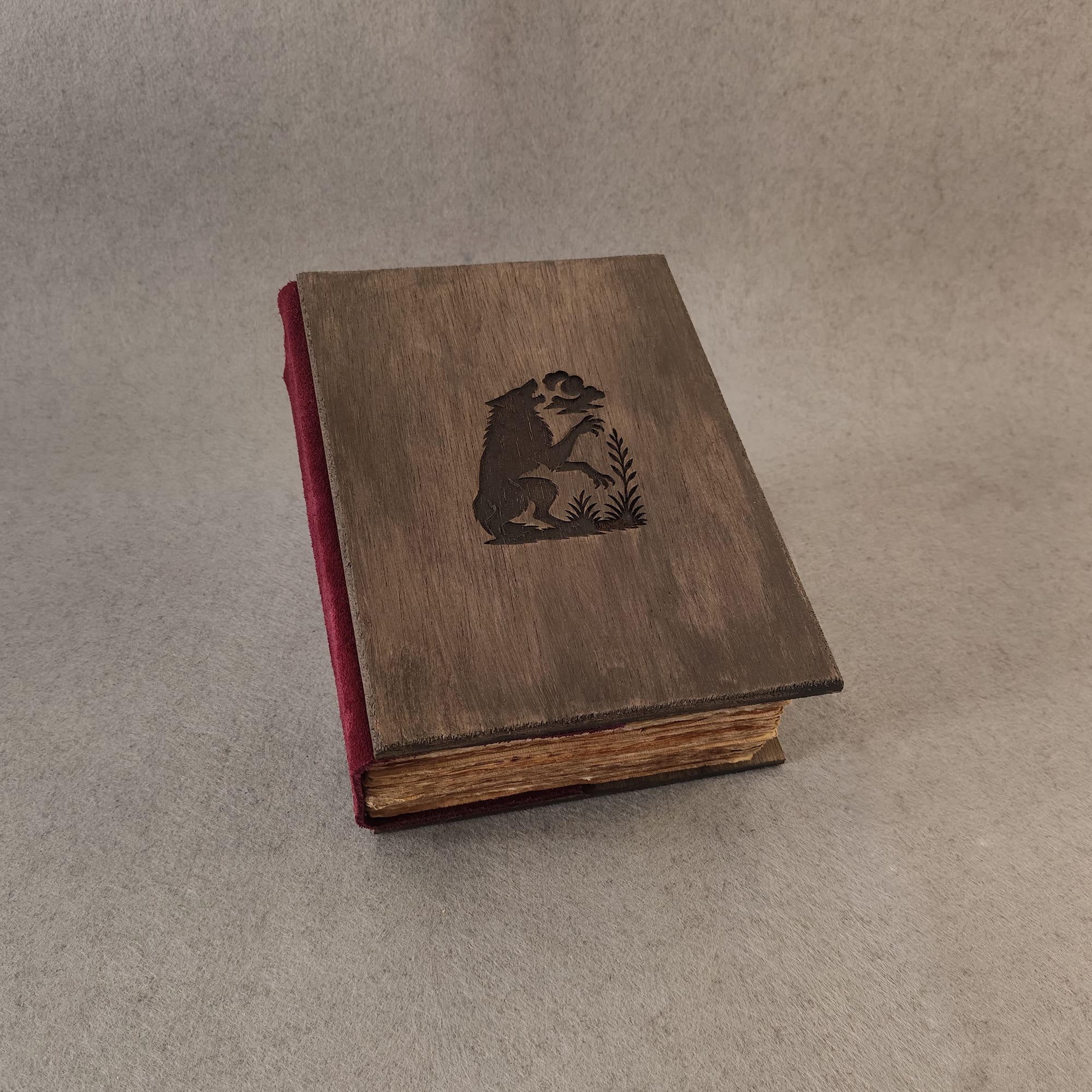
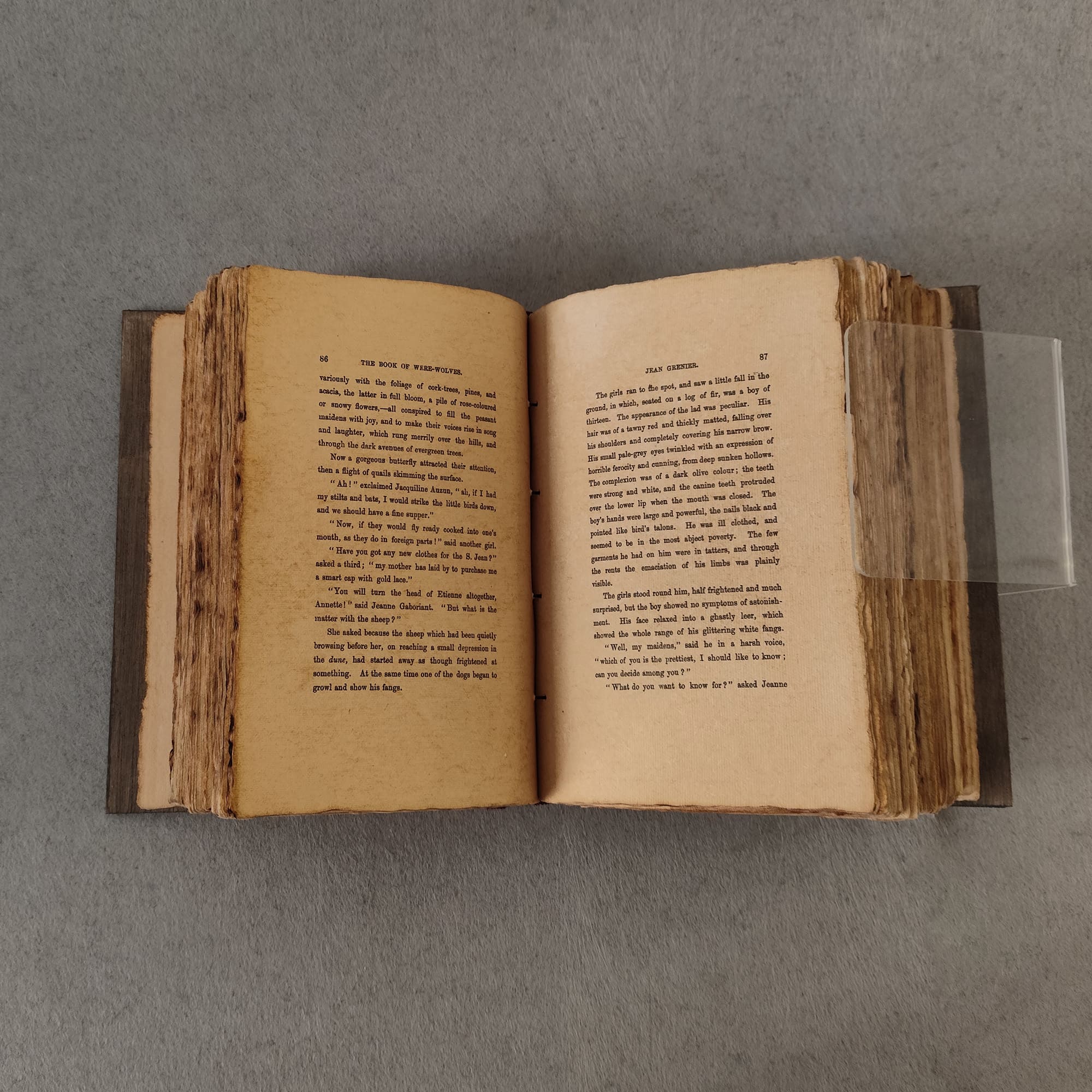
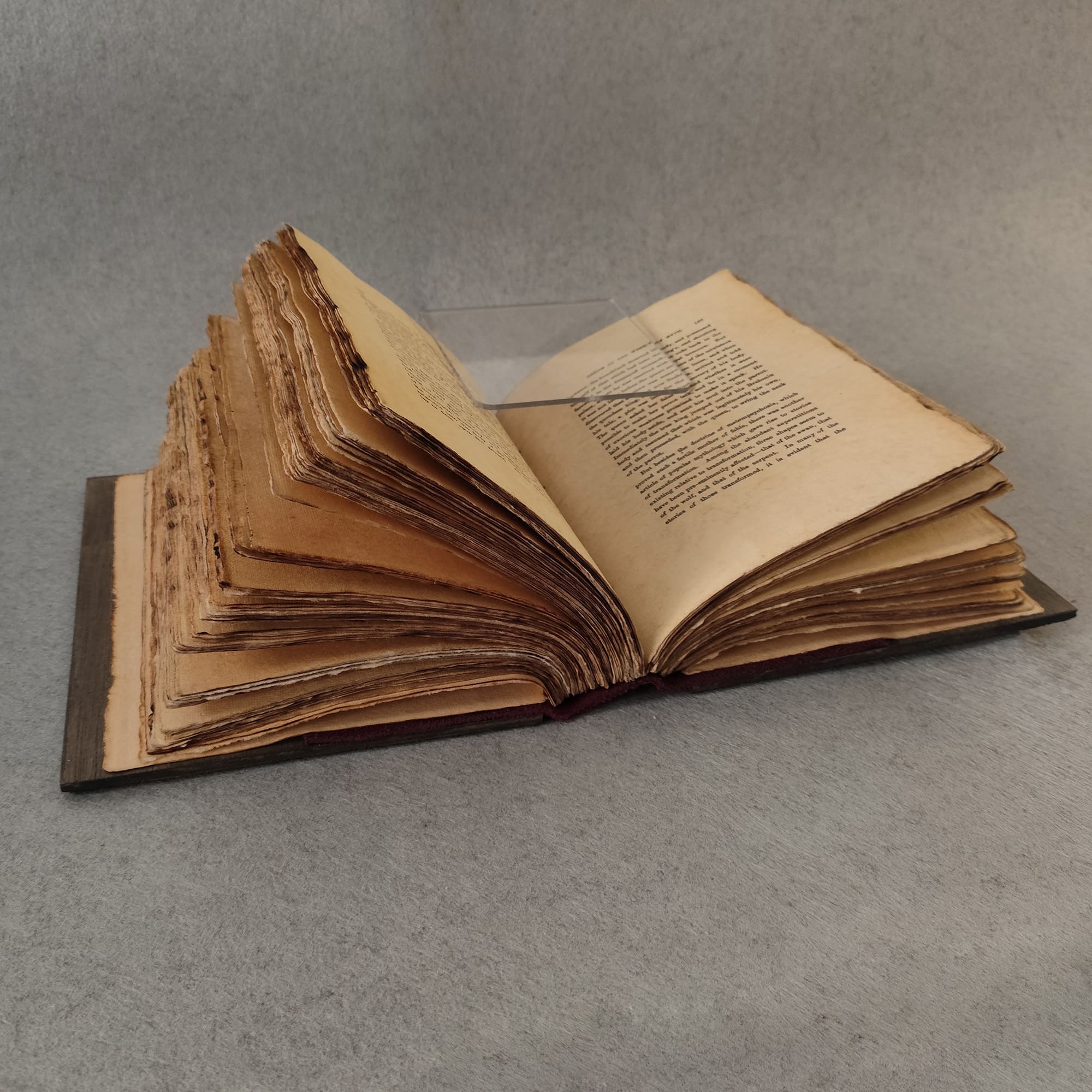
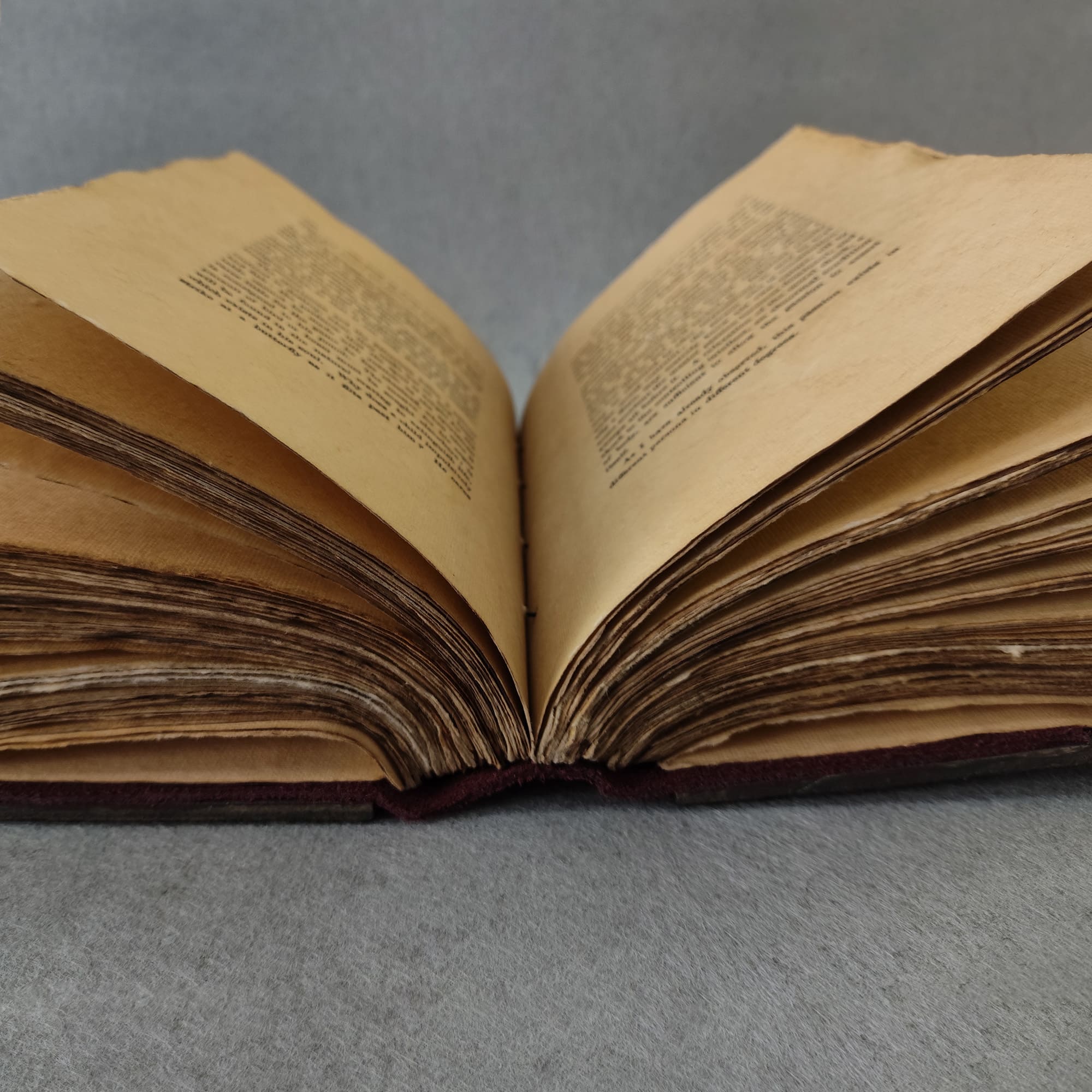
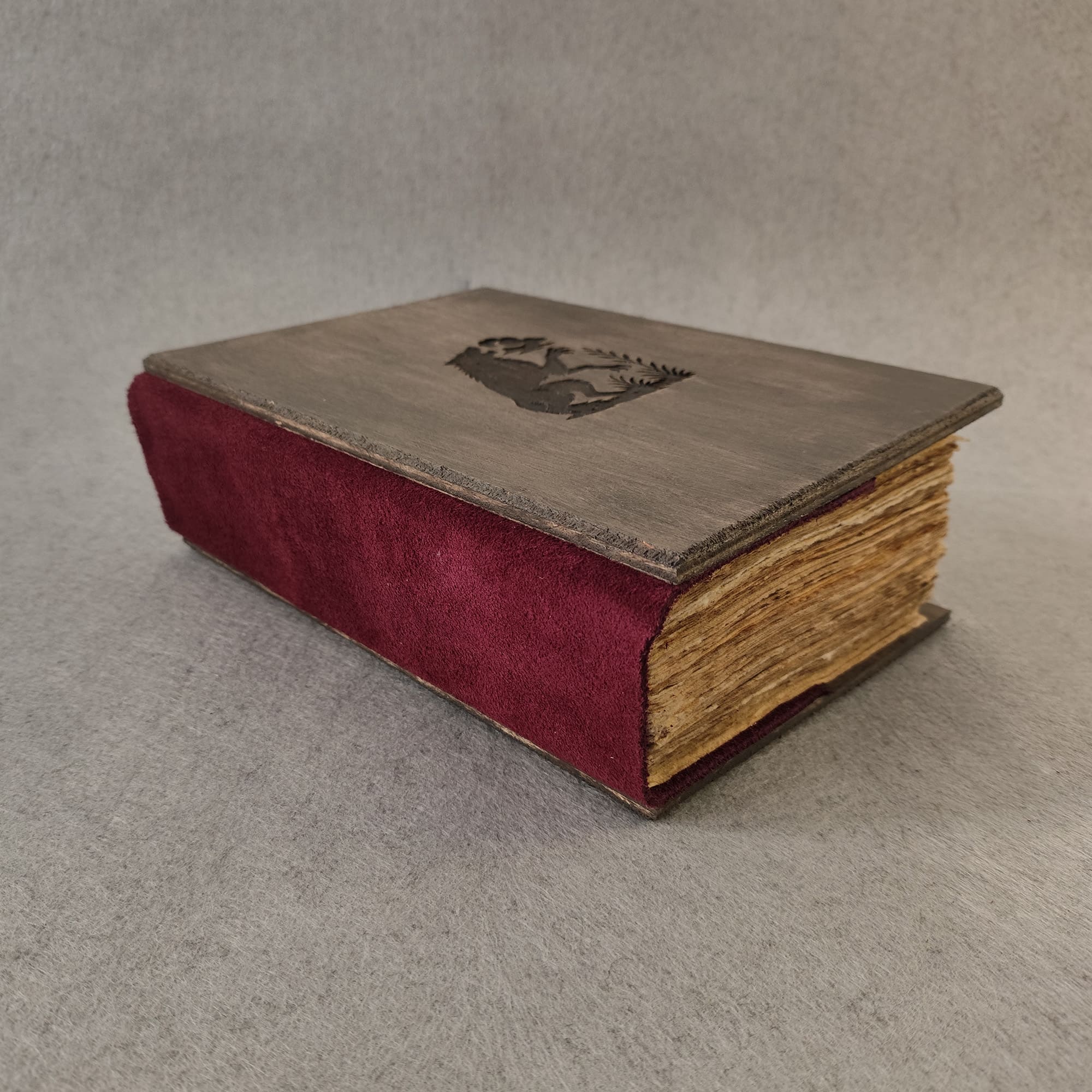
A handcrafted, limited edition, hand-bound in engraved wood and aged paper, turning each copy into a unique piece for contemplation and collection.
A book that unveils the darkest folds of the human soul:
Each copy is one of a kind, created for seekers of the hidden, the historical and the supernatural.
Do you dare to open its pages and look the werewolf myth in the eye?
GTIN: 9788409772742
Book in English
Available only on full moon days
250.00€
For centuries, the figure of the werewolf has embodied the terror of the unknown and the fascination with metamorphosis. In this play, Sabine Baring-Gould explores with erudition and detail the stories of lycanthropes passed down as legends, trials and testimonies from times when the human and the animal were confused.
The Book of Were-Wolves it is a fundamental treatise on lycanthropy, where anthropology, folklore, and mystery converge. Its pages reveal a universe where superstition blends with reality, and where werewolf myths become a reflection of collective fears, repressed violence and the shadow that inhabits every human being.
In the pages of this book beats the echo of an ancient fear, the suspicion that beneath human skin the untamed beast may hide. Each story, each testimony and each legend rescued by Baring-Gould opens a crack into a world where reason stumbles over the inexplicable.
The Book of Were-Wolves is more than a historical study: it is a door to the unsettling, A mirror that reflects both the superstitions of the past and the shadows that still accompany us. A book that invites you to venture into the darkness, There where myth and reality blur, And where the human is distorted into the monstrous.
Chapter I: Introduction.
Chapter II: Lycanthropy among the ancients, With references to classical authors such as Virgil, Herodotus, Ovid and Pliny, As well as Arcadian legends.
Chapter III: The werewolf in the North, Including Nordic traditions and stories from the Icelandic sagas.
Chapter IV: The origin of the Scandinavian werewolf, With references to the berserkers and laws concerning outlaws.
Chapter V: The werewolf in the Middle Ages, with stories collected by European chroniclers and legends from different countries.
Chapter VI: A chapter of horrors, where trials and cases of alleged werewolves accused of cannibalism are recounted.
Chapter VII: Jean Grenier, the famous case of the young man who confessed to crimes and transformations.
Chapter VIII: Folklore related to werewolves in different cultures, from England to Russia, India and Ethiopia.
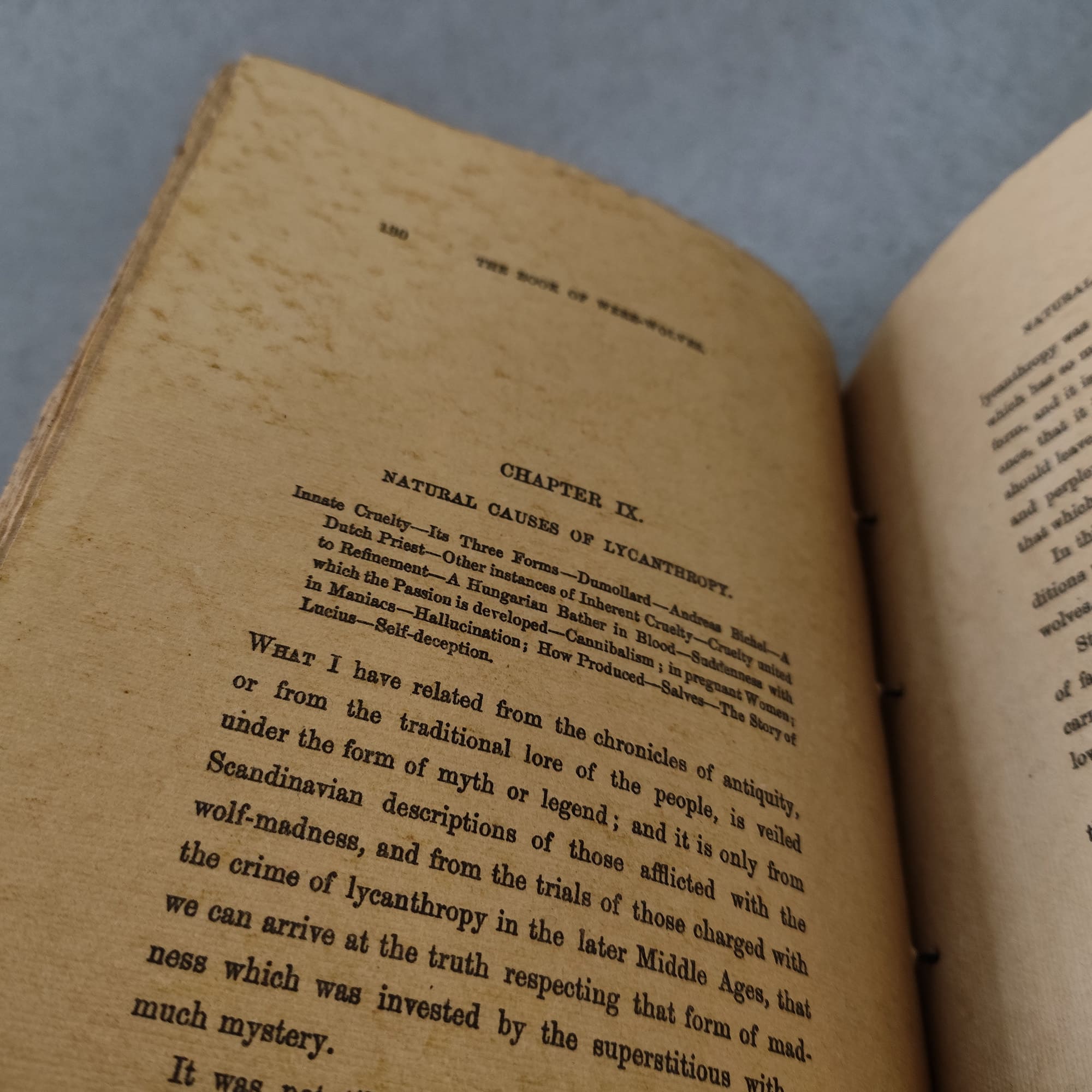
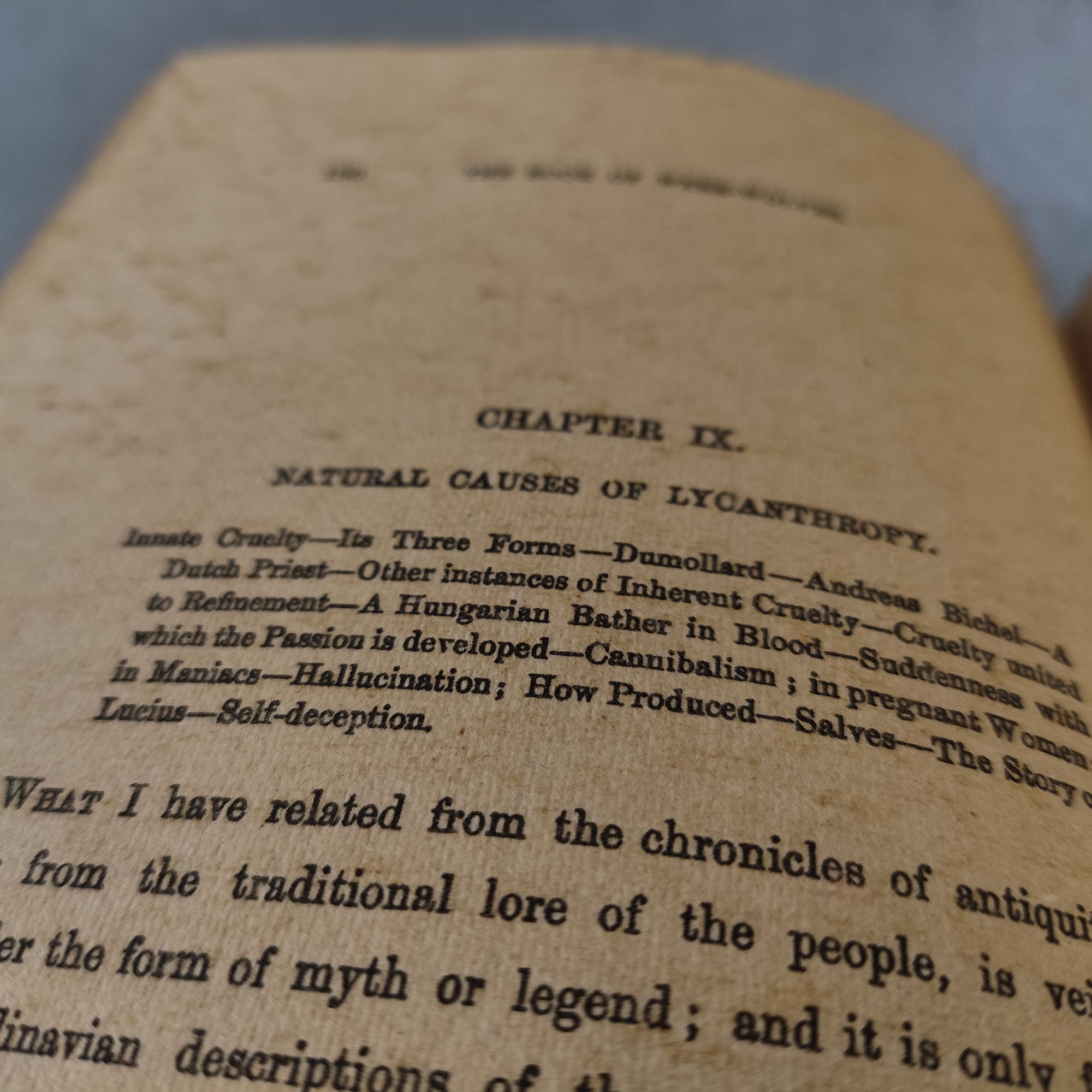
Chapter IX: Natural causes of lycanthropy, such as innate cruelty, madness, hallucination, and cannibalism.
Chapter X: Mythological origin of the werewolf myth, with references to metempsychosis, the transmigration of souls and the relationship between humans and animals in different cultures.
Chapter XI: The Marshal of Retz, Part One: Investigating the Charges.
Chapter XII: The Marshal of Retz, Part Two: The Trial.
Chapter XIII: The Marshal of Retz, Part Three: Sentencing and Execution.
Chapter XIV: A Werewolf in Galicia, Accounts of Events in the Austrian Region of Poland.
Chapter XV: An Unusual Case: The Human Hyena, With Stories of Ghouls and Grave Robbers.
Chapter XVI: A Sermon on Werewolves, With the Speeches of Doctor Johann Geiler.
Each Chapter Invites the Reader to Walk Among the Shadows of the Human and the Animal, To Discover on That Threshold How Much Mystery Still Dwells Within Us.
250.00€
| Cookie | Duration | Description |
|---|---|---|
| cookielawinfo-checkbox-analytics | 11 We use cookies on our website to provide you with the most relevant experience by remembering your preferences and repeat visits. | This cookie is set by the GDPR Cookie Consent plugin. La cookie se utiliza para almacenar el consentimiento del usuario para las cookies de la categoría "Analytics". |
| cookielawinfo-checkbox-functional | 11 We use cookies on our website to provide you with the most relevant experience by remembering your preferences and repeat visits. | La cookie se establece por el consentimiento de cookies GDPR para registrar el consentimiento del usuario para las cookies en la categoría "Funcional". |
| cookielawinfo-checkbox-necessary | 11 We use cookies on our website to provide you with the most relevant experience by remembering your preferences and repeat visits. | This cookie is set by the GDPR Cookie Consent plugin. Las cookies se utilizan para almacenar el consentimiento del usuario para las cookies en la categoría "Necesario". |
| cookielawinfo-checkbox-others | 11 We use cookies on our website to provide you with the most relevant experience by remembering your preferences and repeat visits. | This cookie is set by the GDPR Cookie Consent plugin. La cookie se utiliza para almacenar el consentimiento del usuario para las cookies de la categoría "Otros". |
| cookielawinfo-checkbox-performance | 11 We use cookies on our website to provide you with the most relevant experience by remembering your preferences and repeat visits. | This cookie is set by the GDPR Cookie Consent plugin. La cookie se utiliza para almacenar el consentimiento del usuario para las cookies de la categoría "Rendimiento". |
| viewed_cookie_policy | 11 We use cookies on our website to provide you with the most relevant experience by remembering your preferences and repeat visits. | The cookie is set by the GDPR Cookie Consent plugin and is used to store whether or not the user has consented to the use of cookies. It does not store any personal data. |